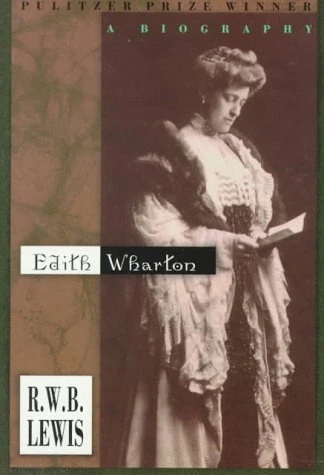
Edith Wharton’s Biography
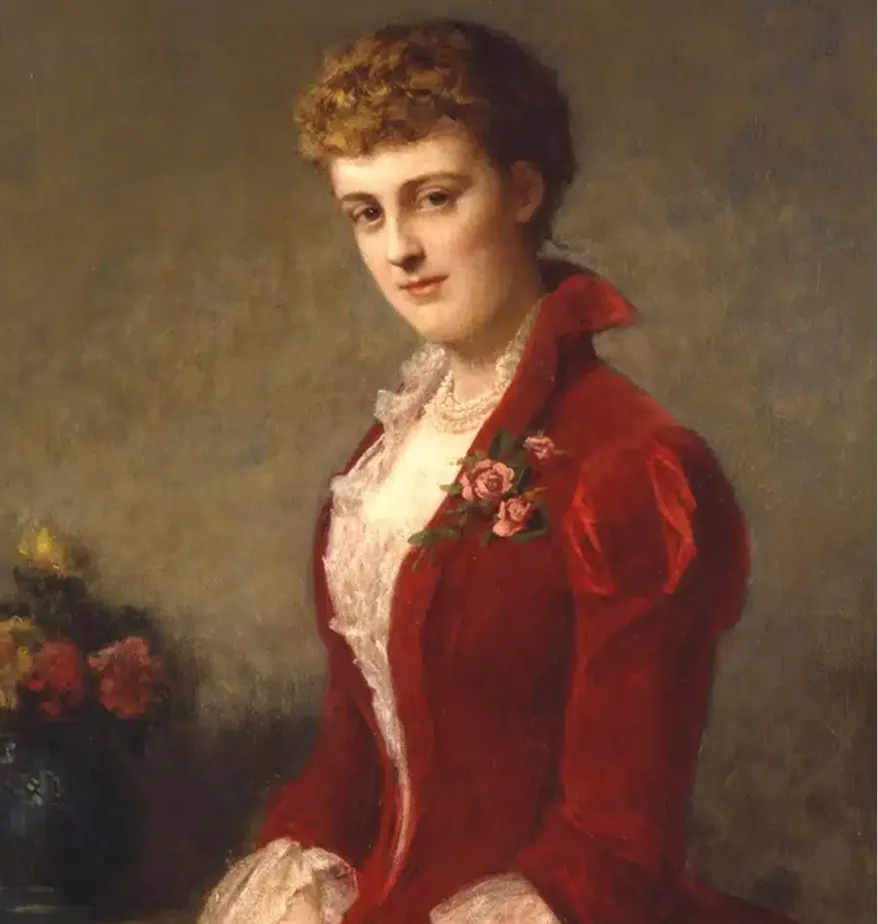
Edith Wharton (1862-1937) was born into a tightly controlled society at a time when women were discouraged from achieving anything beyond a proper marriage.
Childhood
Wharton was born Edith Newbold Jones into a wealthy New York family on January 24, 1862, at 14 West 23rd St. The third child and only daughter of George Frederic and Lucretia Rhinelander Jones, the young Edith spent much of her childhood in Europe, mainly France, Germany, Italy, developing both her gift for languages and a deep appreciation for beauty – in art, architecture and literature.
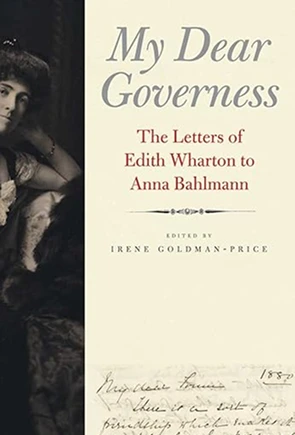
Returning to New York in 1872, Edith’s literary life began: her parents engaged the talented Anna Catherine Bahlmann as her governess, she was allowed access to her father’s library, and at age 16, Verses, her volume of poems was published privately.
Society & Marriage
At age 17, Edith Jones “came out” into society, making the rounds of dances and parties in Newport and New York, observing the rituals of her privileged world, a world she would later gleefully skewer in her fiction. Her childhood ended with the death of her father in March of 1882, followed by two romantic disappointments. Still unmarried at the age of 23, Edith was rapidly approaching “old maid” status. In 1885 she married Edward Robbins (Teddy) Wharton. Though imperfectly suited for each other, the couple filled their early married years with travel, houses, and dogs.
While living in Newport, Wharton honed her design skills, co-authoring (with Ogden Codman, Jr.) her first major book, a surprisingly successful non-fiction work on design and architecture, The Decoration of Houses (1897).
The Mount
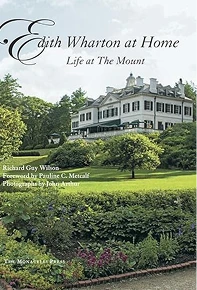
In 1901, eager to escape Newport, Wharton bought 113-acres in Lenox, then designed and built The Mount, a home that would meet her needs as designer, gardener, hostess, and above all, writer. Every aspect of the estate—including its gardens, architecture, and interior design—evokes the spirit of its creator.
In a letter to her lover, Morton Fullerton, Wharton revealed how much of herself she put into The Mount:
“The supreme excellence is simplicity. Moderation, fitness, relevance – these are the qualities that give permanence to the work of the great architects…”
World War I
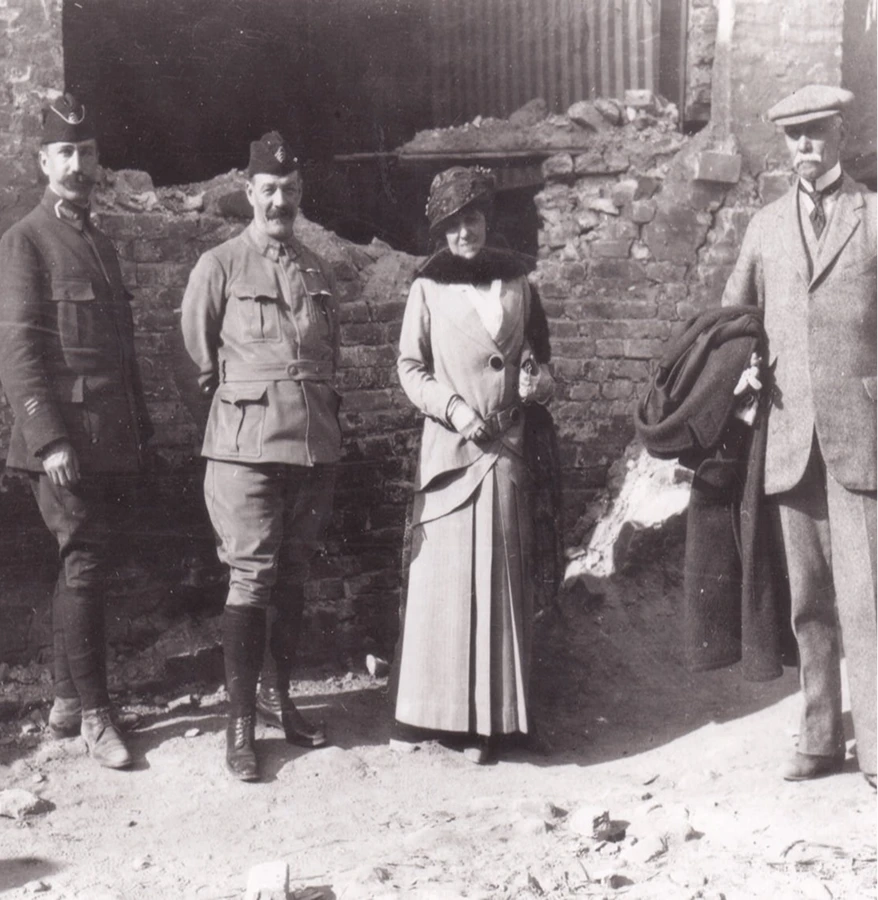
In 1914, when World War I broke out, Edith Wharton was wealthy, famous, recently divorced, and living in her favorite city, Paris. Instead of withdrawing to the safety of England or returning to the United States, Wharton chose to stay and devote herself to creating a complex network of charitable and humanitarian organizations.
Wharton established workrooms for unemployed seamstresses, convalescent homes for tuberculosis sufferers, hostels for refugees, and schools for children fleeing war-torn Belgium. As a writer, Wharton was intent on witnessing the realities of war and was one of a handful of journalists and writers allowed on the front lines. In 1916, Wharton received the French Legion of Honor for her war work.
“Hasn’t it shaken all the foundations of reality for you?”
Later Life
At the end of the war, Wharton moved out of Paris to Pavillon Colombe, a suburban villa in the village of St.Brice-sous-Forêt. In 1921, her novel of old New York, The Age of Innocence, won the Pulitzer Prize for fiction. In 1920 she acquired Château Ste.-Claire, a restored convent in the south of France. For the rest of her life, she divided her time between these two homes, devoted to her friends and dogs, writing prolifically, traveling, and gardening. She only returned to the United States twice after her move to France, the final time in 1923 to receive her Honorary Doctorate from Yale.
She died on August 11, 1937, age 75 at Pavillon Colombe. She is buried, in the Cimetière des Gonards in Versailles, close to her good friend Walter Berry.